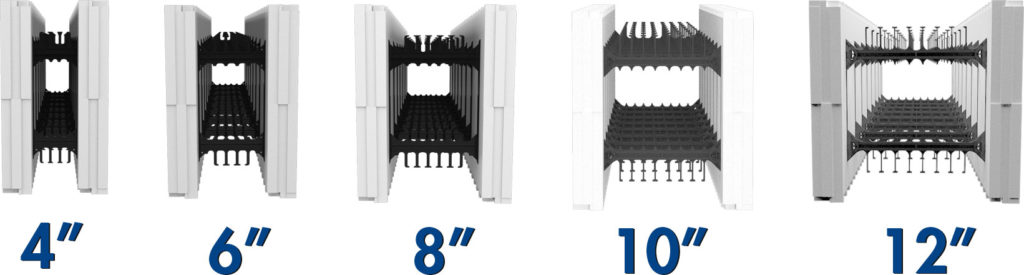
ICFs are designed to create an insulated wall of predetermined thickness. These thicknesses correspond to common accepted engineering widths for concrete walls. Standard widths are 4”, 6”, 8”, 10”, 12”, etc.
ICF Panel Dimensions
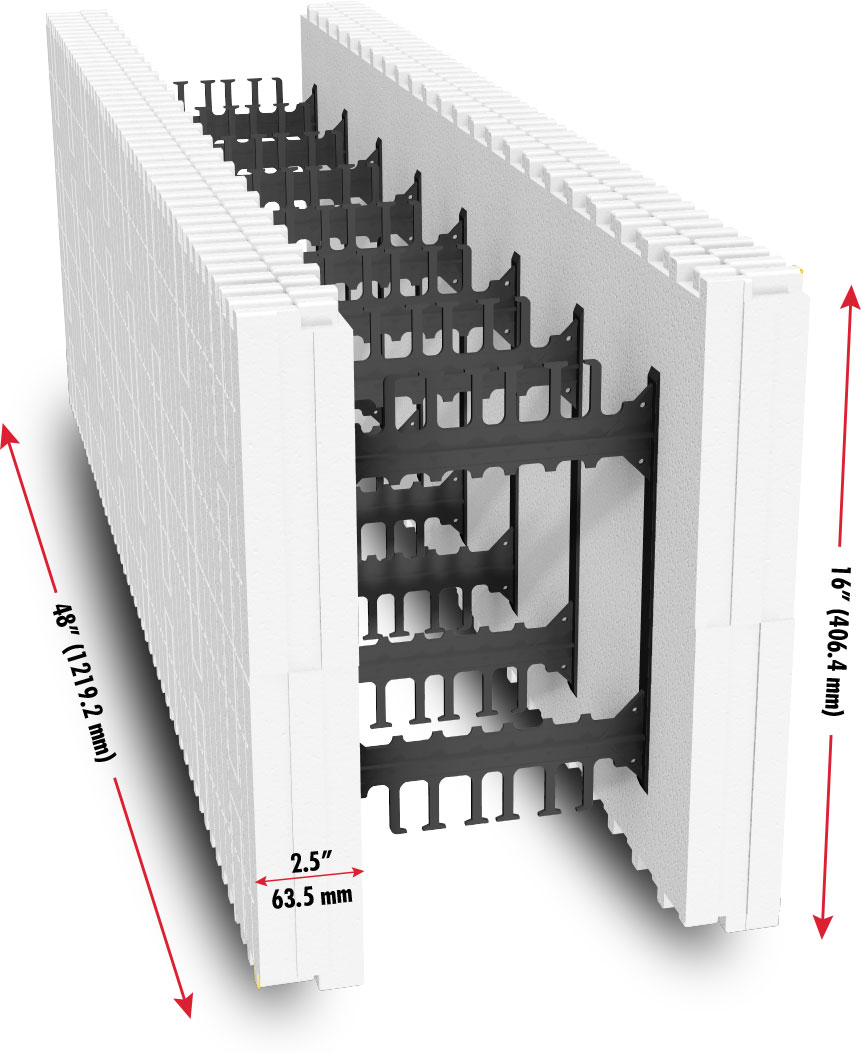
The foam panels are connected via plastic or metal bridges known as webs or ties. Embedded into the foam, they also provide attachment points for finishes, bracing, or other needs.
EPS foam panels are usually 2.5” thick providing significant insulation without creating overly thick wall systems. Standard panel are 48″ long and 16″ tall.
Independent ASTM scientific testing proves ICFs at this thickness with a 6″ concrete core are 58.5% more energy efficient than a 2×6″ wood framed insulated cavity wall. (http://buildblock.com/performance/)
BuildBlock webs are spaced evenly every 6-inches for maximum strength and attachment options.
Webs are 1.5” wide and 15” tall.
The 1-inch gap between courses allows easy running of electrical, mechanical, or plumbing systems.
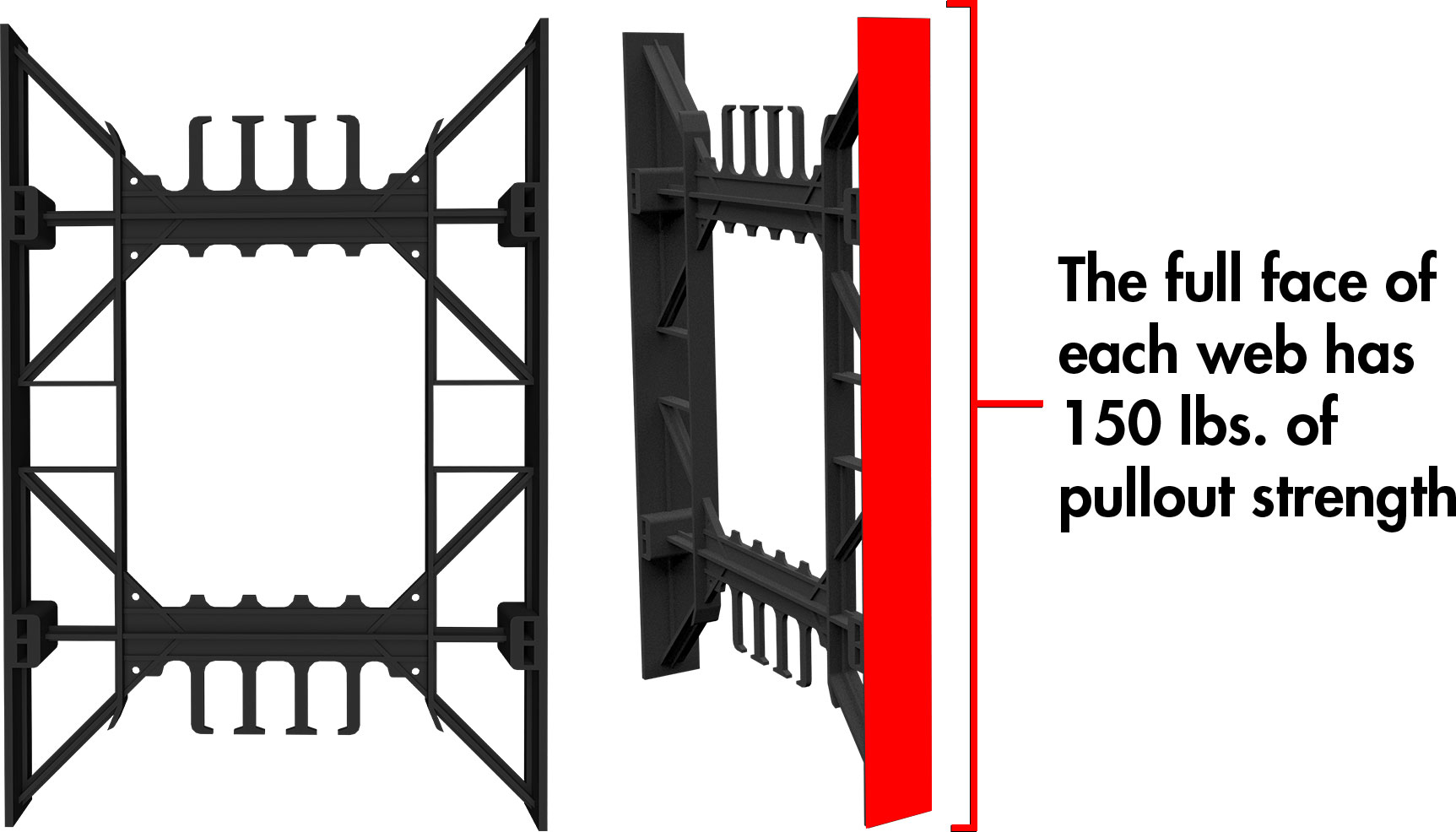
The web full height attachment provides 150lbs of pullout strength, roughly the same as wood.
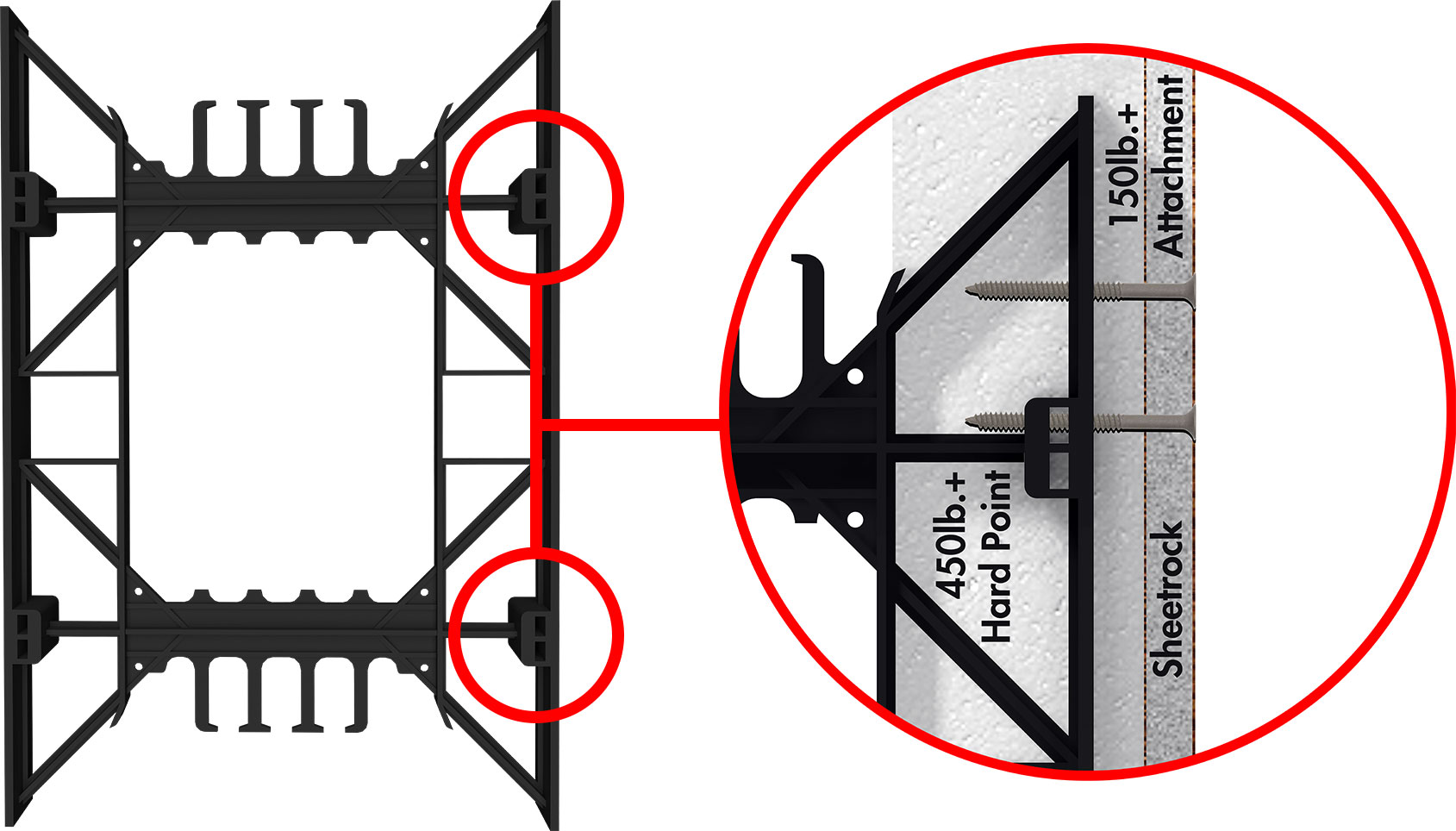
BuildBlock’s patented BB hard point provides 450 lbs. or greater pullout strength.
BuildBlock ICF Form Dimensions
The full face of each BuildBlock ICF web has 150 pounds of pull out strength
BuildBlock High Density Attachment Points
How Do They Work?
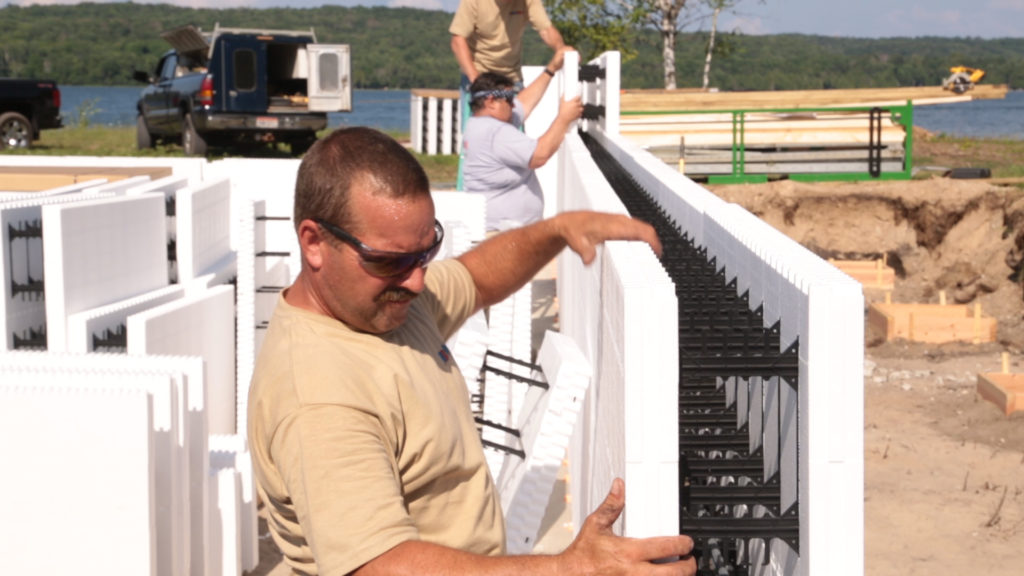
Blocks are engineered to lock together to form a hollow wall cavity. Webs keep rebar in place and hold blocks together during the pour.
BuildBlock ICFs have a unique interlock pattern between blocks that repeats every inch to reduce waste.
BuildBlock provides the tightest interlock on the market to ensure that no additional clips, strapping, zip ties, etc. are needed to keep courses together.
The BuildBlock interlock provides several other advantages.
Keeps water from building up
Easy to cut off small pieces and still interlock with other blocks
Creates a standard way to put blocks together
Prevents sliding, lifting, or shifting when pouring
What Shapes and Sizes Do They Come In?
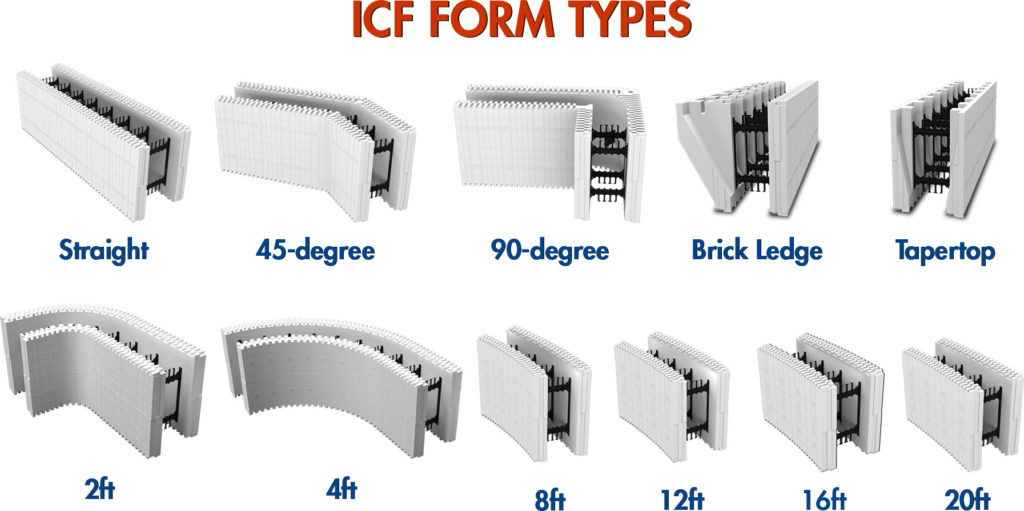
ICFs are designed in a variety of shapes and sizes to accommodate nearly any building design or concept. There are really two types of blocks: Standard ICFs that use an embedded web and All Foam Forms that are molded into a single shape of foam only.
Straight Blocks – These forms are used to create straight walls and are easily stacked and connected together, even when offset from the block below.
45 & 90 degree corners – These are two very common types of corners used in building design.
Radius blocks (2’,4’, 8’, 12’, 16’, 20’ arc radius) – These forms easily interlock and create a predefined curved wall. The 2′ and 4′ radius turn a full 90-degrees in a single form.
Brick Ledge Forms – These forms are found at the top of a wall to create reinforced ledge for brick or masonry above grade.
Taper Top Forms – These forms are only used at the top of a wall that is not continuing up to create a wider area of concrete to support floor or roof trusses.
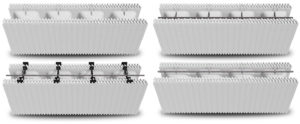
All Foam Forms – These forms provide increased insulation and decreased cost. They will also combine in the same wall with BuildBlock forms.
GlobalBlock All Foam Forms with Attachment Options
Code Approval, Compliance & Product Testing
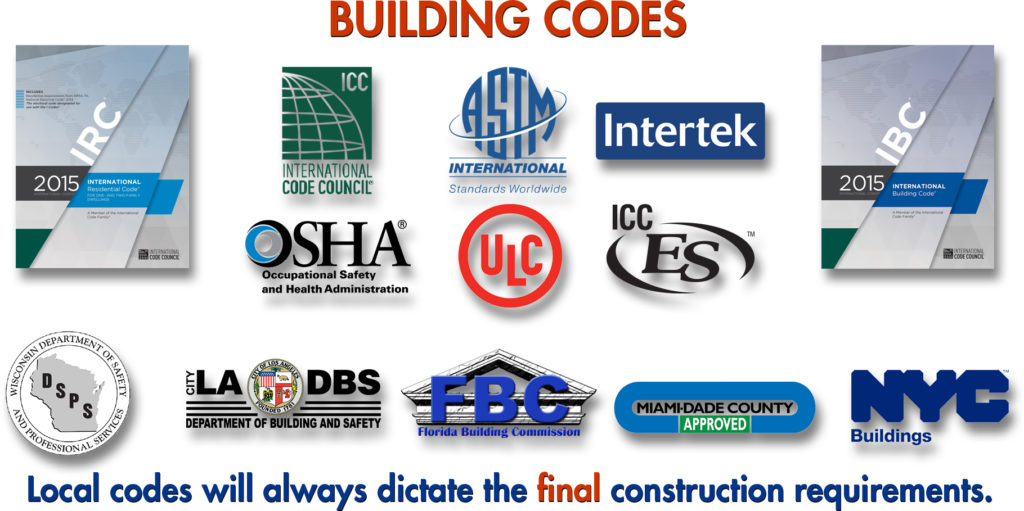
BuildBlock ICFs are independently tested and code approved by Intertek. They carry the Warnock-Hershey and ETL approval marks and are accepted in North America and throughout the world. They comply with the International Building Code and International Residential Code which have specific design standards for mass wall insulation versus cavity wall insulation.
BuildBlock ICFs are also certified in Canada by the CCMC.