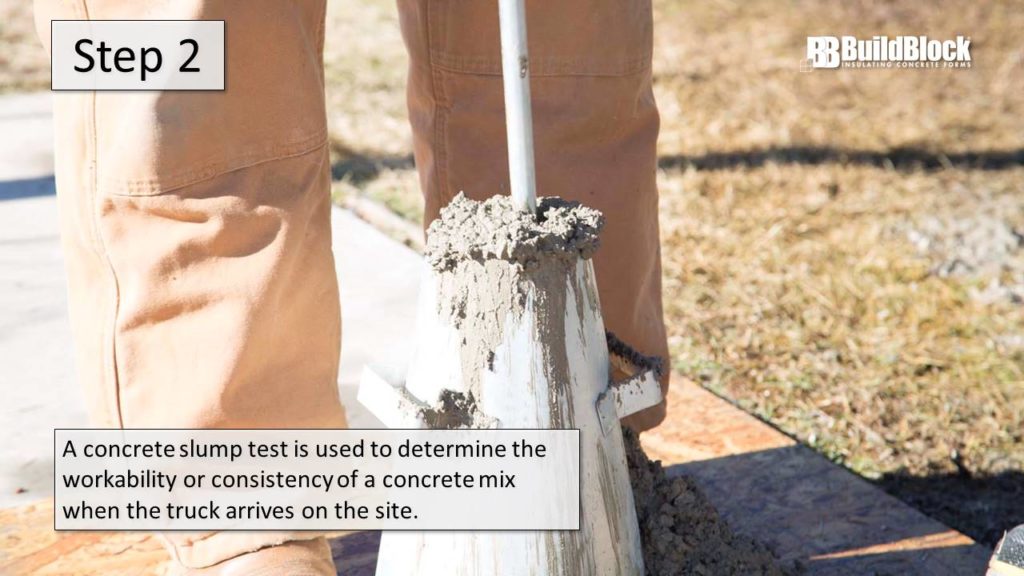
Knowing how the concrete will flow, ensuring that the mix design delivered is the mix design that was ordered will ensure that the pour will go smoothly and the walls will perform as desired. The way this is tested is called a slump test. The slump test uses a standardized method which we will discuss in the following lessons to determine how far a cone of concrete will fall from the shape of the cone. The more liquid, the farther the concrete falls and the higher the slump.
This is important, because the more liquid (higher slump) the concrete is, the more pressure it exerts on the forms. The drier (lower slump) is seen when the concrete is very thick and doesn’t flow smoothly. This is bad for ICFs because you need the right balance to ensure the concrete flows well in the forms and around rebar and when consolidated using internal vibration removes any entrained (trapped) air pockets. This is what prevents honeycombing and voids.
Step 2: A concrete slump test is used to determine the workability or consistency of a concrete mix when a truck arrives on site.