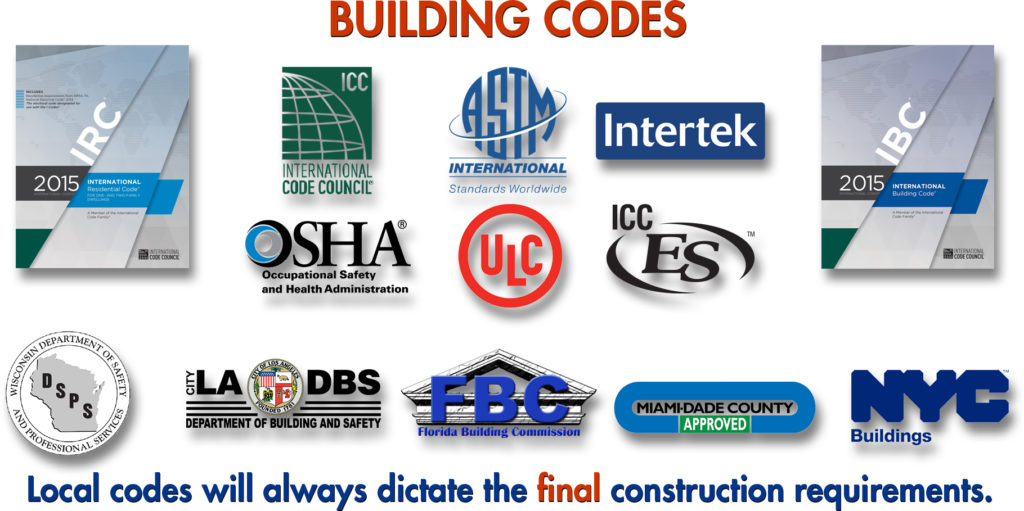
Building codes exist to define and enforce minimum standards for construction. Educate yourself on all that apply to your project before beginning. Evaluate National, State, City, and County codes as well.
Many codes are based on the International Building Code for commercial construction and the International Residential Code for residential construction. They are then refined based on local needs and requirements. Local codes will always dictate the final construction requirements.
Types of Codes
The International Building Code (IBC) is a model building code developed by the International Code Council (ICC). It has been adopted and uses as a base code standard throughout most of the United States.
The International Residential Code (IRC) is specifically for residential buildings and creates minimum regulations for one- and two-family dwellings of three stories or less. It brings together all building, plumbing, mechanical, fuel gas, energy, and electrical provisions.
Each country has its own set of National Building Codes that specify standards and regulations of all constructed objects. These over arching codes are refined in the codes below.
State
Providence
City
County
Local
Current North America Codes, Certifications. and Testing.