Before you select a base type to build your structure upon, BuildBlock highly recommends that you set up a consultation with a local structural engineer or contractors who are familiar with your region’s soil load bearing capacities.
When it comes to an appropriate base for your ICF structure, there are several options.
Footings
Footings are a type of shallow foundation which distributes loads from the structure directly to the ground beneath.
Traditional Foundations
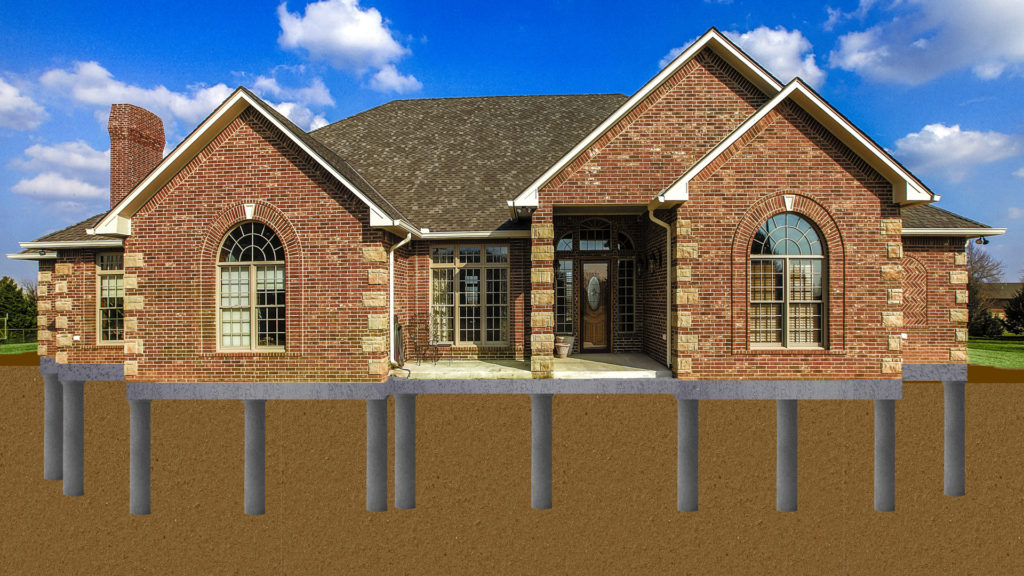
Or “Deep Foundations” distribute weight bearing loads deeper into the ground. One example is the use of Pilings, which uses a tall cylinder of strong material, such as concrete, that’s pushed into the ground so that structures can be supported on top of it.
Concrete Piers
Concrete piers are placed by drilling the approved diameter and depth of a hole in the ground on approved spacing, inserting rebar, and filling with concrete. Pilings and piers are used either when the building is very heavy (such as a high-rise structure) or when the top layer of soil is weak and loads need to be transferred to the stronger rock beneath.
Grade Beams
Grade beams can be used on top of pilings and piers when the surface soil’s load bearing capacity is less than the anticipated design load. These beams consist of reinforced concrete and transfer the load from a bearing wall into spaced foundations such as pile caps, caissons, or concrete piers. Poured grade beams can be used without pier pilings or caissons when the soil load bearing capacity is greater than the anticipated design load.
Slab On Grade Foundations
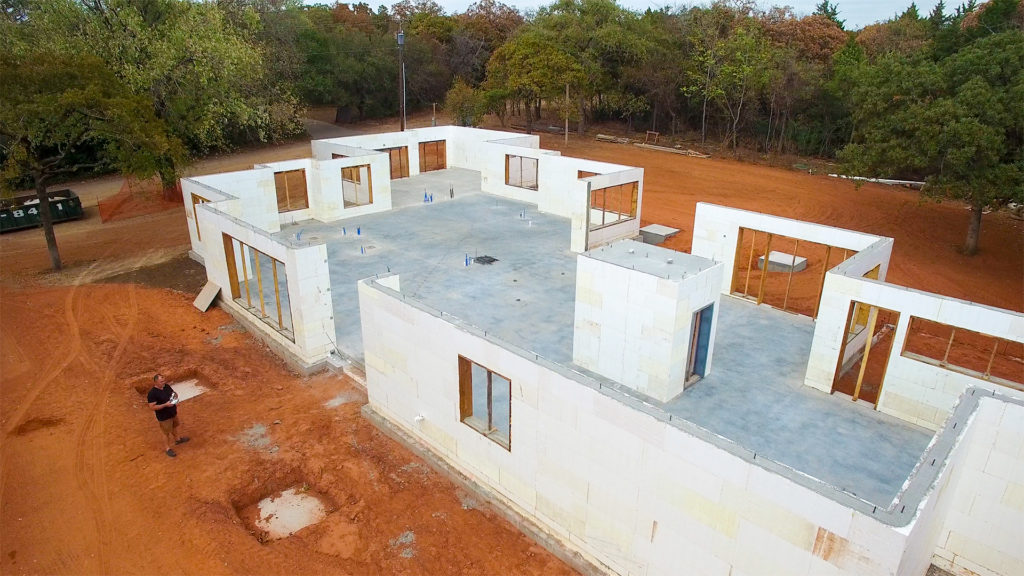
Slab on grade foundations are used when the concrete slab that is to be the foundation is formed and set directly on the ground. The slab may use post tension or have thickened edges to support the BuildBlock forms.
ICF house sitting on top of footings and concrete piers